

Table of Contents
ToggleIntroduction
Many purchasers interested in SARFAESI auction properties come across auction notices containing a statement such as:
“Securitisation Application (S.A.) under Section 17 of the SARFAESI Act is pending before the Debt Recovery Tribunal.”
This often creates confusion.
Common questions include:
* Can I still participate in the auction?
* Is the title defective?
* Can the auction be set aside later?
* Will I become involved in litigation?
* Is the property safe to purchase?
The answer depends upon the facts of the case and the nature of the pending proceedings.
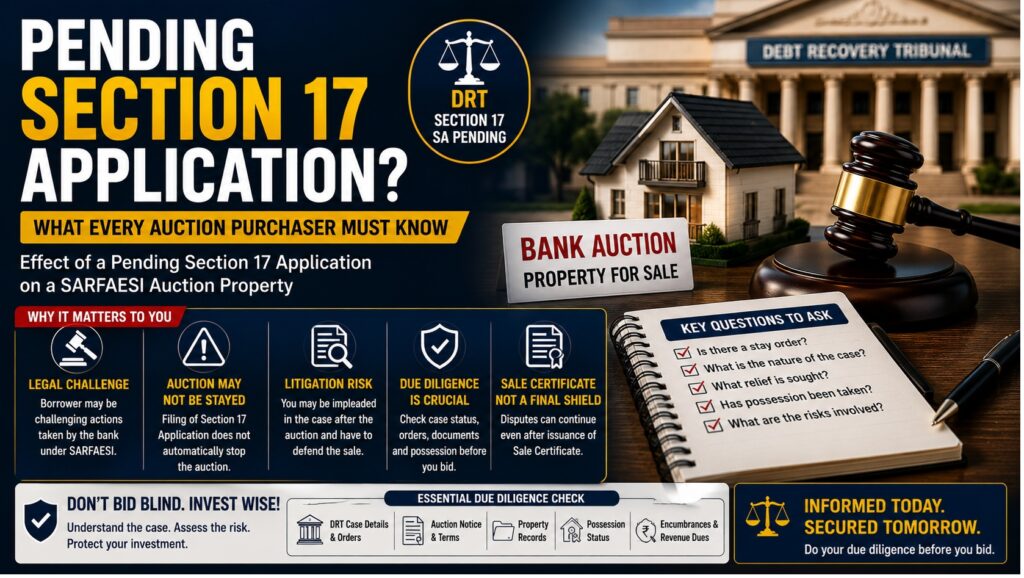
A pending Section 17 application does not automatically prevent an auction from taking place. However, it is an important factor that every prudent purchaser should investigate.
What Is a Section 17 Application?
Section 17 of the SARFAESI Act provides a remedy before the Debt Recovery Tribunal (DRT) to persons aggrieved by measures taken by a secured creditor.
Such persons may include:
* Borrowers.
* Guarantors.
* Mortgagors.
* Legal heirs.
* Occupants.
* Other affected persons.
A Section 17 proceeding is commonly known as a:
Securitisation Application (S.A.)
Why Is a Section 17 Application Filed?
A borrower or other aggrieved person may challenge:
* Possession notices.
* Measures under Section 13(4).
* Section 14 proceedings.
* Physical possession.
* Auction notices.
* Auction sales.
* Sale Certificates.
Accordingly, the existence of a Section 17 application usually indicates that some aspect of the SARFAESI proceedings is under challenge.
Does a Pending Section 17 Application Automatically Stop the Auction?
No.
This is one of the most common misconceptions.
Merely because a Section 17 application has been filed does not mean that:
* The auction cannot proceed.
* The bank is prohibited from selling the property.
* The purchaser will automatically lose title.
The critical question is whether any interim order has been passed by the Tribunal.
Why Should an Auction Purchaser Be Interested in the Pending Case?
Because the purchaser may ultimately become affected by the outcome of the litigation.
Before participating in an auction, a prudent bidder should attempt to ascertain:
* Nature of the dispute.
* Relief sought.
* Present stage of the proceedings.
* Existence of interim orders.
* Status of possession.
Scenario 1 – Section 17 Application Pending Without Any Stay Order
This is perhaps the most common situation.
In such cases:
* The DRT case remains pending.
* No interim protection has been granted.
* The bank proceeds with the auction.
The auction may still take place.
However, a prudent purchaser should understand that litigation remains pending.
Scenario 2 – Interim Stay Granted by the DRT
If the DRT has granted interim protection, the effect depends upon the wording of the order.
For example, the Tribunal may:
* Stay the auction.
* Stay confirmation of sale.
* Restrict further proceedings.
* Pass other interim directions.
The precise order must always be examined.
Scenario 3 – Challenge to Auction Proceedings Themselves
Sometimes the borrower challenges:
* Valuation.
* Reserve price.
* Publication of auction notice.
* Conduct of auction proceedings.
In such cases, the dispute directly concerns the auction process.
A purchaser should carefully examine the nature of the allegations.
Scenario 4 – Challenge to Earlier SARFAESI Measures
In other cases, the challenge may relate to:
* Possession notice.
* Section 14 proceedings.
* Physical possession.
Although the auction may not be the immediate subject of challenge, the outcome of the proceedings may still affect the purchaser’s position.
Can the Auction Purchaser Be Made a Party to the Proceedings?
Yes.
After the auction is completed, the purchaser may be impleaded in pending proceedings concerning the property.
This does not necessarily mean that the purchaser will lose the property.
However, it may require participation in the litigation.
Does a Sale Certificate Eliminate All Risks?
Not necessarily.
A common misconception is:
“Once the Sale Certificate is issued, the matter is closed forever.”
In reality, disputes may continue concerning:
* Validity of SARFAESI proceedings.
* Auction process.
* Alleged procedural irregularities.
* Fraud allegations.
* Jurisdictional issues.
The significance of such disputes depends upon the facts of each case.
What Due Diligence Should a Purchaser Undertake?
Before bidding, consider obtaining:
Details of the Section 17 Case
* Case number.
* Parties.
* Relief sought.
Latest Orders
* Interim orders.
* Status reports.
* Adjournment orders.
Auction Documents
* Sale notice.
* Terms and conditions.
* Possession notice.
Property Records
* Revenue records.
* Tax records.
* Encumbrance records.
Possession Status
* Whether physical possession has been obtained.
* Whether occupants remain on the property.
Questions Every Auction Purchaser Should Ask
Before participating, consider asking:
* What exactly is challenged in the Section 17 proceeding?
* Is there any stay order?
* Has possession been taken?
* Has the property been auctioned previously?
* Is the borrower still in possession?
* Are any High Court proceedings pending?
These questions often reveal more than the auction notice itself.
Common Mistakes Made by Purchasers
Assuming That “Pending Case” Means “No Risk”
Litigation may continue even if no stay order exists.
Assuming That “Pending Case” Means “Do Not Buy”
The existence of litigation does not automatically make the property unsuitable for purchase.
The significance depends upon the nature of the dispute.
Relying Solely on Oral Assurances
Purchasers should independently verify the status of pending proceedings rather than relying exclusively on informal assurances.
Failing to Obtain Court Orders
The actual orders passed in the case are often more important than verbal descriptions of the litigation.
Conclusion
A pending Section 17 application does not automatically prevent a SARFAESI auction from proceeding. However, it is a factor that should never be ignored by a prospective purchaser.
The existence of such proceedings indicates that some aspect of the SARFAESI process is under challenge before the Debt Recovery Tribunal. A prudent purchaser should therefore investigate the nature of the dispute, examine the available orders, and assess the litigation risk before participating in the auction.
Proper due diligence before bidding is often far less expensive than dealing with avoidable litigation after the purchase.
Disclaimer: This article is intended for general informational purposes only and does not constitute legal advice. Every auction property presents unique factual and legal considerations.