

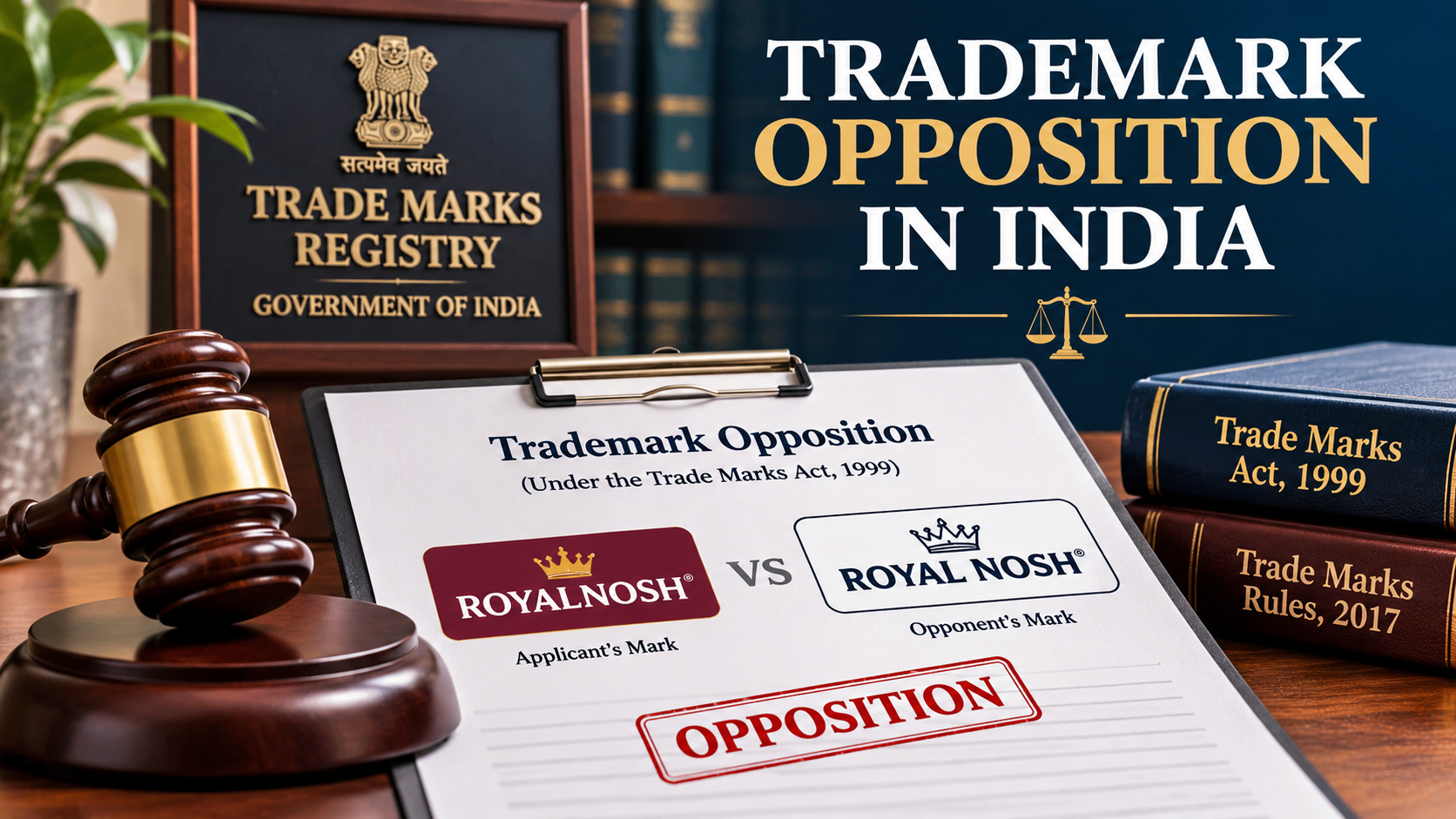
A trademark is an important business asset. It identifies the commercial origin of goods and services, distinguishes one business from another and enables consumers to recognise products associated with a particular proprietor. A trademark may also represent years of investment, goodwill, reputation and customer confidence.
However, registering a trademark is not merely a matter of filing an application with the Trade Marks Registry. Before registration, an application is advertised in the Trade Marks Journal to provide an opportunity for third parties to object to the proposed registration.
Where a published trademark is identical or deceptively similar to an existing trademark, or where its registration is likely to prejudice the rights of an earlier proprietor, an interested person may initiate opposition proceedings before the Registrar of Trade Marks.
Equally, when a trademark application is opposed, the applicant must take timely and appropriate steps to defend the application. The applicant is required to file a Counter-Statement within the statutory period. Failure to do so can result in the application being treated as abandoned.
This article explains why trademark opposition is necessary, when an opposition can be filed, how the opposition procedure operates, and how an applicant should prepare and file a Counter-Statement under Indian trademark law.
Table of Contents
Toggle1.Why Should a Proprietor Oppose a Similar Trademark?
The purpose of trademark opposition is to prevent the registration of a mark which may conflict with an existing trademark or otherwise be contrary to the provisions of the Trade Marks Act, 1999.
A proprietor who has adopted and used a trademark, invested in its promotion and developed goodwill under that mark should remain vigilant about applications filed by third parties for identical or deceptively similar marks.
Failure to oppose a conflicting application may result in another person obtaining registration for a mark which could create confusion in the marketplace or adversely affect the earlier proprietor’s commercial interests.
The principal reasons for opposing a trademark application include the following:
1.1 Prevention of consumer confusion
Where a later trademark is identical or similar to an earlier trademark and is proposed to be used for identical or similar goods or services, consumers may mistakenly believe that the goods or services originate from the same business or from commercially connected businesses.
Section 11(1) of the Trade Marks Act, 1999 provides protection against registration where the similarity of the marks and the goods or services creates a likelihood of confusion, including a likelihood of association with an earlier trademark.
1.2 Protection of goodwill and reputation
A trademark may acquire substantial goodwill through continuous commercial use, advertising, promotion and customer recognition.
Registration of a conflicting mark by another person may dilute the distinctiveness of the earlier mark, affect its reputation and cause commercial harm to its proprietor.
Opposition proceedings provide an opportunity to place the earlier proprietor’s rights and supporting evidence before the Registrar.
1.3 Preventing dishonest adoption
A third party may attempt to adopt a trademark which closely resembles an established mark, with the intention of benefiting from the reputation or goodwill associated with the earlier mark.
The circumstances surrounding adoption, the applicant’s knowledge of the earlier mark, the similarity between the marks and the nature of the competing businesses may be relevant in determining whether the later adoption was bona fide.
Section 11(10)(ii) specifically requires the Registrar, while considering an application and an opposition, to take into consideration bad faith on the part of either the applicant or the opponent affecting trademark rights.
1.4 Protection of well-known trademarks
A well-known trademark may enjoy protection even beyond the goods or services for which it is registered, subject to the statutory requirements.
Section 11(2) provides protection against certain identical or similar marks applied for dissimilar goods or services where the earlier mark is well-known in India and the statutory conditions concerning unfair advantage or detriment are satisfied.
1.5 Preventing registration of marks contrary to statutory requirements
Opposition may also be appropriate where the proposed trademark is:
- Devoid of distinctive character;
- Descriptive of the goods or services;
- A mark which has become customary in the relevant trade;
- Likely to deceive the public or cause confusion;
- Prohibited under another applicable law; or
- Otherwise not eligible for registration under the Trade Marks Act.
The grounds available will depend on the facts of the particular case. A proprietor should not file an opposition merely because another trader uses a similar word. There must be a legally sustainable basis for challenging the application.
2.Who Can File an Opposition?
Section 21(1) of the Trade Marks Act, 1999 provides that any person may oppose an application for registration of a trademark.
Accordingly, the right to oppose is not confined exclusively to the proprietor of a registered trademark.
An opposition may be filed by, among others:
- The proprietor of an earlier registered trademark;
- A person who has been using an earlier trademark;
- A business claiming prior rights and goodwill in a trademark;
- A person claiming proprietorship over an earlier mark;
- A person whose legitimate commercial interests may be affected by the proposed registration; and
- Any other person who has a sustainable statutory ground for opposing registration.
A prior registration is not an indispensable requirement for every opposition. However, the opponent must properly plead and establish the grounds on which the opposition is based.
3.When Should a Trademark Opposition Be Filed?
A trademark opposition can be filed after the application is advertised or re-advertised in the Trade Marks Journal.
Under Section 21(1) of the Trade Marks Act, 1999 read with Rule 42 of the Trade Marks Rules, 2017, the opposition must ordinarily be filed within four months from the date of publication of the relevant Trade Marks Journal.
The period is calculated from the date of publication of the Journal, not from the date on which the opponent happens to discover the application.
Important points concerning limitation
The relevant date is the date of publication of the Trade Marks Journal in which the application is advertised or re-advertised.
- The opposition must be filed within four months.
- The opposition is filed in Form TM-O.
- The prescribed fee is payable.
- The opposition must identify the application and the goods or services against which it is directed.
The four-month period is particularly important. A proprietor should periodically monitor the Trade Marks Journal and conduct appropriate searches to identify potentially conflicting applications.
Practical advice: Do not wait until the last few days of the opposition period. Obtain the application particulars, examine the competing marks, identify the relevant statutory grounds and prepare the opposition well before the deadline.
What Are the Grounds for Opposing a Trademark?
The grounds of opposition depend on the nature of the competing trademarks, the goods or services involved, the earlier rights claimed and the evidence available.
Some of the commonly invoked provisions are as follows.
4.1 Section 9 – Absolute grounds for refusal
Section 9 deals with absolute grounds for refusal of registration.
An opposition may be based on Section 9 where the proposed mark is, for example:
- Devoid of distinctive character;
- Exclusively descriptive of the kind, quality, intended purpose, geographical origin or other characteristics of the goods or services; or
- A mark which has become customary in the current language or in the bona fide and established practices of the trade.
4.2 Section 11 – Relative grounds for refusal
Section 11 is one of the most frequently relied upon provisions in trademark opposition proceedings.
An opposition may be based on Section 11(1) where:
- The later mark is identical to an earlier trademark and the goods or services are similar; or
- The later mark is similar to an earlier trademark and the goods or services are identical or similar;
and there exists a likelihood of confusion on the part of the public, including a likelihood of association with the earlier trademark.
Section 11(2) deals with protection of well-known trademarks in relation to dissimilar goods or services, subject to the statutory requirements.
4.3 Section 12 – Honest concurrent use
Section 12 recognises that, in appropriate circumstances, more than one proprietor may be permitted to register identical or similar trademarks in respect of the same or similar goods or services.
The Registrar may consider honest concurrent use or other special circumstances and impose such conditions or limitations as may be appropriate.
4.4 Section 18 – Proprietorship of the trademark
Section 18(1) requires an applicant to claim proprietorship of a trademark used or proposed to be used by the applicant.
Where the applicant’s claim to proprietorship is disputed, the circumstances of adoption, the nature of use, the applicant’s conduct and the evidence relating to the mark may become relevant.
4.5 Other grounds
Depending on the facts, an opposition may also involve:
- Section 11(3)(a): conflict with law of passing off;
- Section 11(4): consent of the proprietor of the earlier trademark;
- Section 11(10): protection of well-known trademarks and consideration of bad faith;
- Section 14: use of names and representations of living persons or persons recently dead; and
- Section 18(1): absence of a genuine claim to proprietorship.
The grounds must be selected carefully. Merely reproducing several statutory provisions without pleading the supporting facts may weaken the opposition.
5.How Is a Trademark Opposition Filed?
A trademark opposition is filed before the Registrar of Trade Marks in Form TM-O.
The principal procedural steps are as follows:
Step 1 – Identify the published application
Obtain the relevant particulars from the Trade Marks Journal and the Trade Marks Registry database, including:
- Trademark application number;
- Name of the applicant;
- Representation of the trademark;
- Class of goods or services;
- Specification of goods or services;
- Date of application; and
- Date of publication in the Trade Marks Journal.
Step 2 – Examine the earlier trademark rights
The opponent should examine the basis of the rights relied upon, including:
- Earlier trademark registration or application;
- Date of adoption and first use;
- Nature and extent of commercial use;
- Invoices and business records;
- Advertising and promotional materials;
- Sales turnover and market presence;
- Evidence of reputation and goodwill; and
- Relevant assignments or other documents establishing title.
Where the opposition relies on prior use, the opponent should be prepared to establish the relevant dates and the nature of such use.
Step 3 – Compare the competing trademarks
The competing marks should be examined as a whole. Relevant considerations may include:
- Visual similarity;
- Phonetic similarity;
- Structural similarity;
- Conceptual similarity;
- The distinctive and dominant elements of the marks;
- The nature of the goods or services;
- The relevant consumers;
- The trade channels; and
- The likelihood of confusion or association.
The fact that two trademarks contain a common word or expression does not, by itself, establish that they are deceptively similar. The comparison must be undertaken in the context of the complete marks and the relevant goods or services.
Step 4 – Prepare and file the Notice of Opposition
The Notice of Opposition must be prepared in Form TM-O and should contain the particulars required under Rule 43 of the Trade Marks Rules, 2017.
It should clearly identify:
- The application opposed;
- The goods or services against which opposition is entered;
- The earlier trademark or other rights relied upon;
- The particulars of the opponent; and
- The grounds on which the opposition is based.
The opposition must be properly verified and filed with the prescribed fee.
6.What Happens After the Notice of Opposition Is Filed?
After the Notice of Opposition is filed, the Registrar ordinarily serves a copy of it on the applicant.
The applicant is then required to file a Counter-Statement within the statutory period.
The opposition proceeding is not decided merely on the basis of the Notice of Opposition. The applicant is entitled to contest the allegations, and both parties may place evidence before the Registrar in accordance with the prescribed procedure.
The principal stages are:
- Filing of Notice of Opposition by the opponent.
- Service of the Notice of Opposition on the applicant.
- Filing of Counter-Statement by the applicant.
- Evidence in support of opposition by the opponent.
- Evidence in support of application by the applicant.
- Evidence in reply by the opponent, if any.
- Hearing before the Registrar.
- Decision on the opposition and the application.
7.What Is a Counter-Statement in Trademark Opposition Proceedings?
A Counter-Statement is the applicant’s formal response to the Notice of Opposition.
It is the pleading through which the applicant states the grounds on which the application for registration should be allowed to proceed despite the objections raised by the opponent.
A Counter-Statement is not merely a letter denying the allegations. It is a formal pleading which must address the material allegations in the Notice of Opposition and explain the applicant’s case.
The applicant should carefully examine the Notice of Opposition and identify:
- Allegations which are admitted;
- Allegations which are denied;
- Allegations which are not admitted for want of knowledge;
- The applicant’s own version of the relevant facts;
- The legal grounds supporting the application; and
- The relief sought from the Registrar.
7.1 Statutory time limit for filing the Counter-Statement
Under Section 21(2) of the Trade Marks Act, 1999 read with Rule 44 of the Trade Marks Rules, 2017, the applicant must file the Counter-Statement within two months from receipt of the copy of the Notice of Opposition served by the Registrar.
This is a mandatory procedural deadline.
If the applicant fails to file the Counter-Statement within the prescribed period, the application is deemed to have been abandoned.
An applicant should therefore not ignore a notice of opposition or assume that the matter can be defended at a later stage.
7.2 Form prescribed for Counter-Statement
The Counter-Statement is required to be filed in Form TM-O under Rule 44 of the Trade Marks Rules, 2017.
The Counter-Statement must also be verified in accordance with Rule 43(2), (3) and (4).
The prescribed filing fee, where applicable, must also be paid.
8.How Should a Counter-Statement Be Prepared?
The preparation of a Counter-Statement requires a careful examination of the Notice of Opposition, the applicant’s trademark application and the relevant facts.
A well-prepared Counter-Statement should ordinarily contain the following:
8.1 Preliminary submissions
The applicant may set out the basic facts relating to the application, including:
- The trademark applied for;
- The application number and class;
- The date of application;
- The nature of the goods or services;
- Whether the application is based on actual use or proposed use; and
- The applicant’s claim to proprietorship.
8.2 Paragraph-wise response to the Notice of Opposition
The applicant should respond to the numbered paragraphs of the Notice of Opposition.
The response should distinguish between:
Admissions: Facts which are genuinely correct and may be admitted.
Denials: Allegations which are disputed and must be specifically denied with reasons wherever appropriate.
Non-admissions: Allegations which the applicant cannot admit for want of knowledge or supporting particulars.
A general statement that all allegations are denied may not be sufficient. Material allegations should be addressed individually.
8.3 Distinctiveness of the applicant’s trademark
Where the opposition is based on similarity with an earlier mark, the applicant should explain why the competing marks are distinguishable.
The comparison should consider the marks in their entirety, including their visual, phonetic and conceptual features.
The applicant should not rely exclusively on minor spelling differences where the overall impression may still be confusingly similar.
8.4 Honest adoption and proprietorship
The applicant should explain the circumstances in which the trademark was conceived and adopted.
Relevant particulars may include:
- The reason for selecting the mark;
- The date and circumstances of adoption;
- The applicant’s business activities;
- The nature of the goods or services;
- The applicant’s intention to use the mark; and
- Actual commercial use, where applicable.
Where the application was filed on a proposed-to-be-used basis, the applicant should not falsely claim prior commercial use. Any subsequent commencement of use may be explained accurately, with supporting documents reserved for the evidence stage.
8.5 Challenge to the opponent’s claims
Where appropriate, the applicant may dispute:
- The opponent’s claimed date of adoption;
- The opponent’s claim of proprietorship;
- The alleged chain of title or assignment;
- The extent of actual use;
- The alleged reputation or goodwill;
- The claim that the mark is well-known in India;
- The alleged likelihood of confusion; and
- The allegation of dishonest adoption.
The applicant should distinguish between facts which are specifically within the applicant’s knowledge and allegations which the opponent is required to establish through evidence.
8.6 Prayer
The Counter-Statement should conclude with an appropriate prayer requesting the Registrar to dismiss the opposition and permit the application to proceed to registration, subject to the applicable provisions of the Act.
9.Evidence After Filing the Counter-Statement
Filing the Counter-Statement does not conclude the opposition proceedings. The next important stage is the submission of evidence.
The Trade Marks Rules, 2017 prescribe the sequence and time limits for filing evidence.
9.1 Evidence by the opponent – Rule 45
Within two months from service of a copy of the Counter-Statement, the opponent must either:
- File evidence by way of affidavit in support of the opposition; or
- Inform the Registrar and the applicant that the opponent does not wish to file evidence and intends to rely on the facts stated in the Notice of Opposition.
The opponent must also deliver copies of its evidence and exhibits to the applicant.
Failure to take the prescribed action within the time limit results in the opposition being deemed abandoned.
9.2 Evidence by the applicant – Rule 46
Within two months of receiving copies of the opponent’s affidavits or the opponent’s intimation that it does not wish to file evidence, the applicant must either:
- File evidence by way of affidavit in support of the application and deliver copies to the opponent; or
- Intimate that the applicant does not wish to file further evidence and intends to rely on the Counter-Statement and/or evidence already filed in connection with the application.
Failure to take action within the prescribed period results in the application being deemed abandoned.
9.3 Evidence in reply by the opponent – Rule 47
The opponent may file evidence by way of affidavit in reply within one month from receipt of the applicant’s evidence.
Such evidence must be served on the applicant.
9.4 Further evidence – Rule 48
No further evidence may ordinarily be filed by either side as of right. However, the Registrar may grant leave to either party to file further evidence on such terms, including as to costs, as may be considered appropriate.
9.5 What documents may be relevant?
Depending on the nature of the dispute, relevant evidence may include:
- Trademark registration certificates and application records;
- Invoices and sales records;
- Product packaging and labels;
- Advertising and promotional materials;
- Website records and dated online publications;
- Sales turnover statements;
- Tax and business records;
- Evidence of the date of first use;
- Assignment deeds and other title documents;
- Evidence of market reputation; and
- Documents showing the circumstances of adoption.
The documents should be relevant to the particular trademark and the goods or services in dispute. A collection of unrelated documents will not necessarily establish the case.
10.Hearing and Decision by the Registrar
After completion of the evidence stage, the Registrar issues notice of the hearing in accordance with Rule 50.
Both parties are entitled to present their respective submissions.
The Registrar considers the pleadings, evidence and legal arguments and decides whether the trademark should be registered, refused or registered subject to conditions or limitations.
Under Section 21(5), the Registrar may also take into account a ground of objection even if that ground was not specifically relied upon by the opponent.
The consequences of non-appearance should also be borne in mind. Under Rule 50, if the applicant is absent at the relevant adjourned hearing, the application may be treated as abandoned. If the opponent is absent, the opposition may be dismissed for want of prosecution, subject to the statutory provisions.
11.Relevant Provisions of the Trade Marks Act, 1999
The following are the principal statutory provisions relevant to trademark opposition proceedings. These extracts reproduce the operative portions relevant to this subject.
Section 9 – Absolute grounds for refusal of registration
Section 9(1):
“The trade marks—
(a) which are devoid of any distinctive character, that is to say, not capable of distinguishing the goods or services of one person from those of another person;
(b) which consist exclusively of marks or indications which may serve in trade to designate the kind, quality, quantity, intended purpose, values, geographical origin or the time of production of the goods or rendering of the service or other characteristics of the goods or service;
(c) which consist exclusively of marks or indications which have become customary in the current language or in the bona fide and established practices of the trade,
shall not be registered.”
Section 11 – Relative grounds for refusal of registration
Section 11(1):
“Save as provided in section 12, a trade mark shall not be registered if, because of—
(a) its identity with an earlier trade mark and similarity of goods or services covered by the trade mark; or
(b) its similarity to an earlier trade mark and the identity or similarity of the goods or services covered by the trade mark,
there exists a likelihood of confusion on the part of the public, which includes the likelihood of association with the earlier trade mark.”
Section 11(2):
“A trade mark which—
(a) is identical with or similar to an earlier trade mark; and
(b) is to be registered for goods or services which are not similar to those for which the earlier trade mark is registered in the name of a different proprietor,
shall not be registered if or to the extent the earlier trade mark is a well-known trade mark in India and the use of the later mark without due course would take unfair advantage of or be detrimental to the distinctive character or repute of the earlier trade mark.”
Section 11(6):
“The Registrar shall, while determining whether a trade mark is a well-known trade mark, take into account any fact which he considers relevant for determining a trade mark as a well-known trade mark including—
(i) the knowledge or recognition of that trade mark in the relevant section of the public including knowledge in India obtained as a result of promotion of the trade mark;
(ii) the duration, extent and geographical area of any use of that trade mark;
(iii) the duration, extent and geographical area of any promotion of the trade mark, including advertising or publicity and presentation, at fairs or exhibition of the goods or services to which the trade mark applies;
(iv) the duration and geographical area of any registration of or any publication for registration of that trade mark under this Act to the extent they reflect the use or recognition of the trade mark;
(v) the record of successful enforcement of the rights in that trade mark, in particular, the extent to which the trade mark has been recognised as a well-known trade mark by any court or Registrar under that record.”
Section 11(10):
“While considering an application for registration of a trade mark and opposition filed in respect thereof, the Registrar shall—
(i) protect a well-known trade mark against the identical or similar trade marks;
(ii) take into consideration the bad faith involved either of the applicant or the opponent affecting the right relating to the trade mark.”
Section 12 – Registration in the case of honest concurrent use
“In the case of honest concurrent use or of other special circumstances which in the opinion of the Registrar, make it proper so to do, he may permit the registration by more than one proprietor of the trade marks which are identical or similar (whether any such trade mark is already registered or not) in respect of the same or similar goods or services, subject to such conditions and limitations, if any, as the Registrar may think fit to impose.”
Section 18 – Application for registration
Section 18(1):
“Any person claiming to be the proprietor of a trade mark used or purposed to be used by him, who is desirous of registering it, shall apply in writing to the Registrar in the prescribed manner for the registration of his trade mark.”
Section 21 – Opposition to registration
Section 21(1):
“Any person may, within four months from the date of the advertisement or re-advertisement of an application for registration, give notice in writing in the prescribed manner and on payment of such fee as may be prescribed, to the Registrar, of opposition to the registration.”
Section 21(2):
“The Registrar shall serve a copy of the notice on the applicant for registration and, within two months from the receipt by the applicant of such copy of the notice of opposition, the applicant shall send to the Registrar in the prescribed manner a counterstatement of the grounds on which he relies for his application, and if he does not do so he shall be deemed to have abandoned his application.”
Section 21(3):
“If the applicant sends such counter-statement, the Registrar shall serve a copy thereof on the person giving notice of opposition.”
Section 21(4):
“Any evidence upon which the opponent and the applicant may rely shall be submitted in the prescribed manner and within the prescribed time to the Registrar, and the Registrar shall give an opportunity to them to be heard, if they so desire.”
Section 21(5):
“The Registrar shall, after hearing the parties, if so required, and considering the evidence, decide whether and subject to what conditions or limitations, if any, the registration is to be permitted, and may take into account a ground of objection whether relied upon by the opponent or not.”
12.Relevant Provisions of the Trade Marks Rules, 2017
The following Rules prescribe the procedure for filing an opposition, filing a Counter-Statement and submitting evidence.
Rule 42 – Notice of Opposition
Rule 42(1):
“A notice of opposition to the registration of a trademark under sub-section (1) of section 21, with such particulars as specified in Rule 43, shall be filed in form TM-O within four months from the date of publication of the trademark journal in which the application for registration of the trademark was advertised or re advertised.”
Rule 43 – Requirements of Notice of Opposition
Rule 43(1):
“A notice of opposition shall contain—
(a) in respect of an application against which opposition is entered: the application number, an indication of the goods or services listed in the trademark application against which opposition is entered, and the name of the applicant for the trademark.
(b) in respect of the earlier trademark or the earlier right on which the opposition is based.
(c) in respect of the opposing party.
(d) The grounds on which the opposition is based.”
Rule 43(2):
“A notice of opposition shall be verified at the foot by the opponent or by his duly authorised agent.”
Rule 43(3):
“The person verifying shall state specifically by reference to the numbered paragraphs of the notice of opposition, what he verifies of his own knowledge and what he verifies upon information received and believed to be true.”
Rule 43(4):
“The verification shall be signed by the person making it and shall state the date on which and the place at which it was signed.”
Rule 44 – Counter-Statement
Rule 44(1):
“The counterstatement required by sub-section (2) of section 21 shall be sent on Form TM-O within two months from the receipt by the applicant of the copy of the notice of opposition from the Registrar and shall set out what facts, if any, alleged in the notice of opposition, are admitted by the applicant. A copy of the counterstatement shall be ordinarily served by the Registrar to the opponent within two months from the date of receipt of the same.”
Rule 44(2):
“The counterstatement shall be verified in the manner as provided in sub-rules (2), (3) and (4) of rule 43.”
Rule 45 – Evidence in support of opposition
Rule 45(1):
“Within two months from service of a copy of the counterstatement, the opponent shall either leave with the Registrar, such evidence by way of affidavit as he may desire to adduce in support of his opposition or shall intimate to the Registrar and to the applicant in writing that he does not desire to adduce evidence in support of his opposition but intends to rely on the facts stated in the notice of opposition.
He shall deliver to the applicant copies of any evidence including exhibits, if any, that he leaves with the Registrar under this sub-rule and intimate the Registrar in writing of such delivery.”
Rule 45(2):
“If an opponent takes no action under sub-rule (1) within the time mentioned therein, he shall be deemed to have abandoned his opposition.”
Rule 46 – Evidence in support of application
Rule 46(1):
“Within two months on the receipt by the applicant of the copies of affidavits in support of opposition or of the intimation that the opponent does not desire to adduce any evidence in support of his opposition, the applicant shall leave with the Registrar such evidence by way of affidavit as he desires to adduce in support of his application and shall deliver to the opponent copies thereof or shall intimate to the Registrar and the opponent that he does not desire to adduce any evidence but intends to rely on the facts stated in the counterstatement and or on the evidence already left by him in connection with the application in question.”
Rule 46(2):
“If an applicant takes no action under sub-rule (1) within the time mentioned therein, he shall be deemed to have abandoned his application.”
Rule 47 – Evidence in reply by opponent
“Within one month from the receipt by the opponent of the copies of the applicant’s affidavit the opponent may leave with the Registrar evidence by affidavit in reply and shall deliver to the applicant copies of the same including exhibits, if any, and shall intimate the Registrar in writing of such delivery.”
Rule 48 – Further evidence
“No further evidence shall be left on either side, but in any proceedings before the Registrar, he may at any time, if he thinks fit, give leave to either the applicant or the opponent to leave any evidence upon such terms as to costs or otherwise as he may think fit.”
Rule 49 – Translation of documents
“Where a document is in a language other than Hindi or English and is referred to in the notice of opposition, counterstatement or an affidavit filed in an opposition proceeding, an attested translation thereof in Hindi or English shall be submitted before the registrar and a copy thereof shall be provided to opposite party.”
Rule 50 – Hearing and decision
Rule 50(1):
“The Registrar, after the closure of the evidence, shall give notice to the parties of the first date of hearing. The date of hearing shall be for a date at least one month after the date of the first notice.”
Rule 50(3):
“If the applicant is not present at the adjourned date of hearing and at the time mentioned in the notice, the application may be treated as abandoned.”
Rule 50(4):
“If the opponent is not present at the adjourned date of hearing and at time mentioned in the notice, the opposition may be dismissed for want of prosecution and the application may proceed to registration subject to section 19.”
13.Important Practical Considerations
Trademark opposition proceedings involve statutory deadlines and evidentiary requirements. Both the opponent and the applicant should approach the proceedings with proper preparation.
The following points deserve particular attention:
For the opponent:
- Monitor the Trade Marks Journal regularly.
- Identify conflicting applications within the four-month opposition period.
- Verify the earlier trademark rights and the relevant dates.
- Plead appropriate statutory grounds.
- Preserve evidence of use, goodwill, reputation and title.
- File evidence within the period prescribed under Rule 45.
For the applicant:
- Do not ignore a Notice of Opposition.
- Calculate the two-month Counter-Statement period from receipt of the Registrar’s copy.
- Respond to the material allegations paragraph by paragraph.
- Avoid unnecessary admissions.
- Explain the applicant’s claim to proprietorship and the circumstances of adoption.
- Preserve relevant evidence of use and adoption.
- File evidence within the period prescribed under Rule 46.
- Attend the hearing and present appropriate legal submissions.
A Counter-Statement should not be treated as a routine formality. It is the applicant’s principal pleading in the opposition proceedings. An inadequate or careless response may make it difficult to present the applicant’s case effectively at the later evidence and hearing stages.
14.Conclusion
Trademark opposition is an important statutory mechanism for protecting trademark rights and preventing the registration of marks which may conflict with earlier rights or otherwise violate the Trade Marks Act, 1999.
For an existing trademark proprietor, timely opposition can help protect goodwill, reputation and commercial identity. For an applicant whose trademark is opposed, a properly prepared Counter-Statement is essential to preserve the application and contest the objections.
The statutory timelines must be strictly monitored. In particular, the opponent must ordinarily file the Notice of Opposition within four months from publication of the Trade Marks Journal, while the applicant must file the Counter-Statement within two months from receipt of the Notice of Opposition served by the Registrar.
The success of an opposition or its defence depends not merely on the similarity of the competing marks, but also on the quality of the pleadings, the applicable statutory grounds, the documentary evidence and the legal submissions made before the Registrar.
Legal Disclaimer: This article is intended for general legal information and awareness. It does not constitute legal advice or create an advocate-client relationship. Trademark opposition proceedings are fact-specific, and the applicable legal grounds, limitation periods and procedural requirements should be examined in each individual case. The statutory provisions and rules reproduced above should be read along with the current amendments, notifications and applicable procedural directions.