

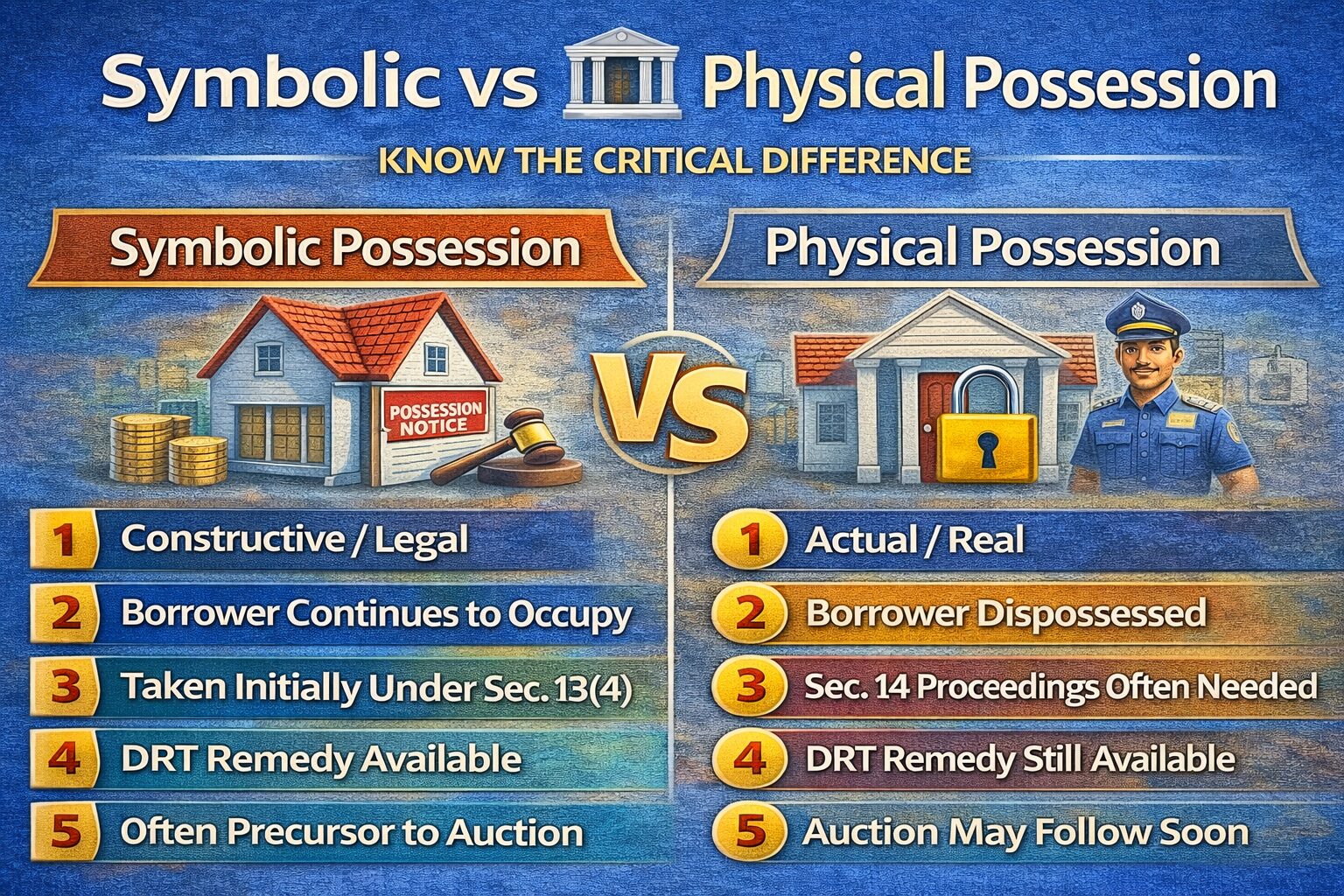
One of the most misunderstood aspects of the SARFAESI Act, 2002 is the concept of possession. Borrowers often panic upon seeing a possession notice pasted on their property, assuming immediate eviction. In reality, SARFAESI recognises two distinct types of possession—symbolic possession and physical possession—each with different legal consequences.
This article explains the difference between symbolic possession and physical possession under SARFAESI, their legal basis, and the rights and remedies available to borrowers.
Table of Contents
ToggleWhat Is Possession Under SARFAESI?
Possession under SARFAESI refers to the exercise of control by the secured creditor over the secured asset after default. It is one of the enforcement measures available to banks under Section 13(4) of the Act.
Possession can be:
Symbolic (constructive), or
Physical (actual)
Symbolic Possession – Meaning and Legal Effect
What Is Symbolic Possession?
Symbolic possession is the first stage of enforcement, where the bank:
Issues a possession notice
Affixes it on the secured property
Publishes it in two newspapers (one vernacular)
At this stage:
The borrower usually continues to occupy the property
Legal control is asserted by the bank
No forcible eviction takes place
Legal Basis of Symbolic Possession
Symbolic possession is taken under:
Section 13(4) of the SARFAESI Act
Rule 8 of the Security Interest (Enforcement) Rules, 2002
It signifies that the bank has invoked its statutory right of enforcement.
Why Banks Take Symbolic Possession First
Banks generally prefer symbolic possession because:
It complies with due process
It avoids immediate confrontation
It allows borrowers an opportunity to approach DRT
Symbolic possession is often a precursor to auction proceedings.
Physical Possession – Meaning and Legal Effect
What Is Physical Possession?
Physical possession involves:
Actual dispossession of the borrower
Taking control of the property
Locking and sealing premises, if required
This stage has serious consequences, as the borrower loses access to the property.
How Physical Possession Is Taken
Physical possession may be taken:
With the borrower’s cooperation, or
Through assistance of police and administration
Banks usually invoke Section 14 of the SARFAESI Act to seek help from the District Magistrate or Chief Metropolitan Magistrate.
Key Differences Between Symbolic and Physical Possession
| Aspect | Symbolic Possession | Physical Possession |
|---|---|---|
| Nature | Constructive / Legal | Actual / Real |
| Borrower Occupation | Usually continues | Borrower dispossessed |
| Police Assistance | Not required | Often required |
| Stage | Initial enforcement | Advanced enforcement |
| Urgency for Borrower | High | Critical |
| DRT Remedy | Available | Still available, but urgent |
Borrower’s Remedy at Each Stage
After Symbolic Possession
Borrowers can:
File application before Debt Recovery Tribunal (DRT) under Section 17
Seek interim stay on further proceedings
Challenge legality of possession notice
This is the most effective stage to seek relief.
After Physical Possession
Borrowers can still:
Approach DRT
Seek restoration of possession
However:
Relief becomes more difficult
Courts are cautious
Practical hardships increase
Common Illegalities in Possession Proceedings
Possession—symbolic or physical—can be challenged if:
Demand notice was defective
Objections under Section 13(3A) were ignored
Asset is agricultural land
Section 14 order is mechanical
Possession notice not properly served
Procedural compliance is mandatory at every stage.
Misconceptions Among Borrowers
❌ Symbolic possession means eviction
❌ Bank can break open premises without notice
❌ No remedy after possession
✔ In reality:
Symbolic possession does not evict
Physical possession requires legal process
Remedies exist at every stage
Practical Advice for Borrowers
Do not panic on seeing possession notice
Act immediately after symbolic possession
Do not wait for physical dispossession
Preserve photographs and documents
Seek legal advice at the earliest
Conclusion
The distinction between symbolic possession and physical possession under SARFAESI is not merely technical—it has serious legal and practical consequences. Symbolic possession is a warning and an opportunity; physical possession is a crisis point. Borrowers who understand this difference and act promptly can effectively protect their rights and property.
FAQs
Q. Can a bank take physical possession directly?
Generally no. Symbolic possession usually precedes physical possession.
Q. Can borrowers stay in the property after symbolic possession?
Yes, unless physical possession is taken lawfully.
Q. Is court permission required for physical possession?
Magistrate assistance under Section 14 is commonly required.